
Blog Details
Near Point of Convergence (NPC): Testing Method, Normal Values, and Interpretation
Near Point of Convergence (NPC): Testing Method, Normal Values, and Interpretation
Primary Keywords: Near Point of Convergence, NPC test, near point of convergence test, normal NPC values, convergence insufficiency
Secondary Keywords: convergence test, binocular vision, NPC measurement, convergence break point, convergence recovery point, eye convergence, optometry tests
Introduction
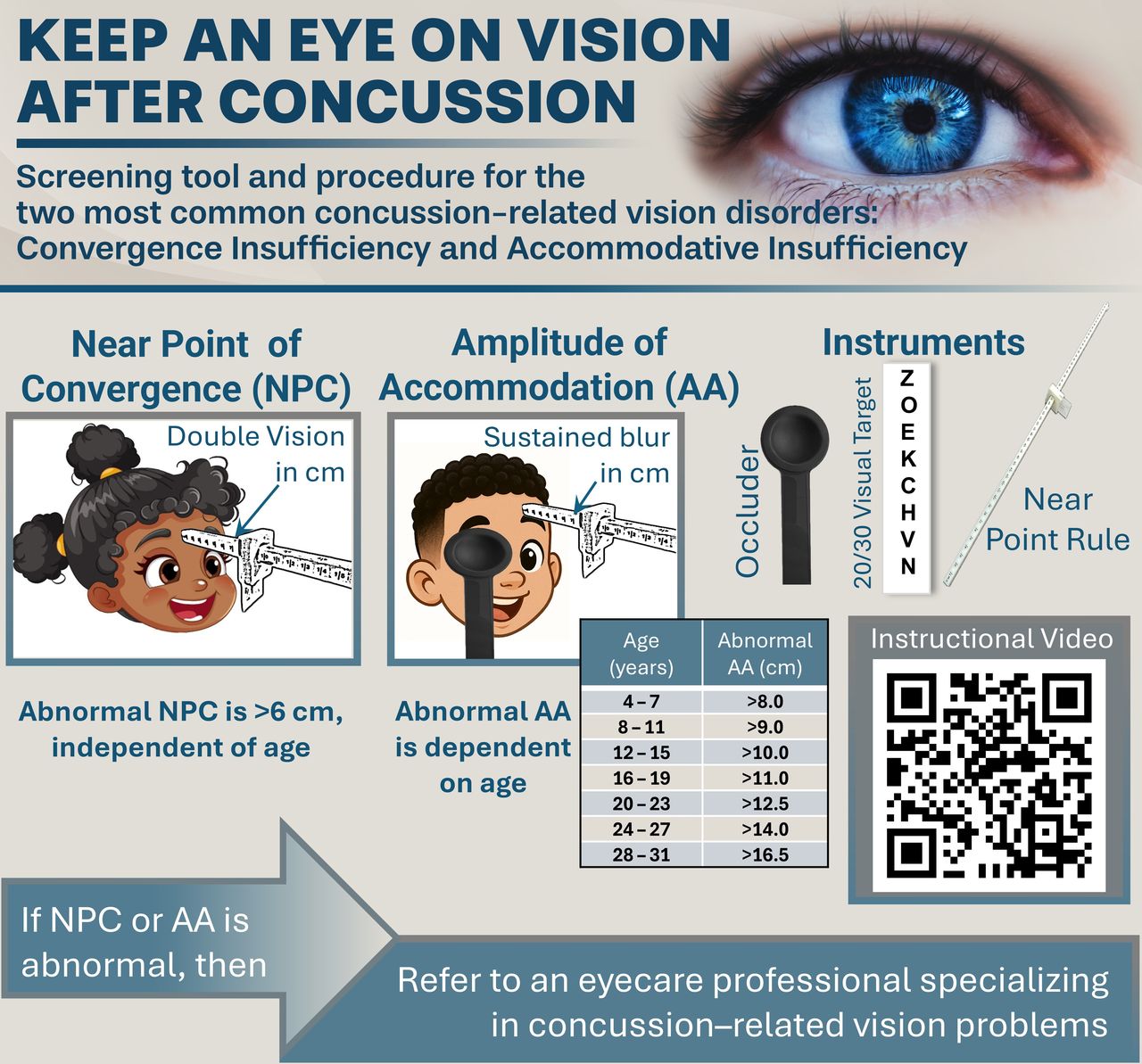
The Near Point of Convergence (NPC) is an important clinical measurement used to evaluate how effectively the two eyes can move inward and maintain binocular fixation on a near target. It is a commonly performed test in optometry and ophthalmology, particularly when assessing patients with symptoms such as eye strain, headaches, blurred vision, double vision, or difficulty with prolonged near work.
During near vision, the eyes must converge so that the image of the object falls appropriately on corresponding retinal areas. If the eyes cannot maintain convergence as a target approaches, binocular single vision may break down.
The NPC test helps clinicians assess this ability by gradually moving a target toward the patient's nose and recording the point at which convergence is lost.
Understanding NPC testing, normal values, break and recovery points, interpretation, and clinical significance is essential for students of optometry and ophthalmology.
What Is the Near Point of Convergence?
The Near Point of Convergence (NPC) is the closest point to the patient at which the eyes can maintain single binocular fixation on a target.
In simple words:
NPC is the nearest point where both eyes can continue to look at the same target without one eye drifting outward or the patient seeing double.
As the target moves closer to the eyes, the demand for convergence increases.
At a certain point, the patient's convergence ability is no longer sufficient to maintain binocular single vision.
This is called the break point.
When the target is moved away again, binocular single vision is restored at the recovery point.
Therefore, NPC testing commonly records:
- Break point
- Recovery point
Why Is the Near Point of Convergence Important?
NPC provides information about the patient's ability to converge during near tasks.
It can be particularly useful when investigating symptoms associated with:
- Reading
- Writing
- Computer use
- Smartphone use
- Prolonged near work
- Studying
- Visual concentration
An abnormal or remote NPC can be associated with convergence insufficiency, although NPC should not be interpreted in isolation.
A comprehensive binocular vision examination may also include:
- Near phoria
- Positive fusional vergence
- Accommodation
- Accommodative facility
- Stereopsis
- Ocular motility
- Symptom assessment
Basic Principle of NPC Testing
The principle behind NPC testing is simple.
A near target is gradually moved toward the patient's nose while the patient attempts to maintain single binocular fixation.
As the target gets closer:
Target moves closer → convergence demand increases → convergence reaches limit → binocular fixation breaks
The examiner records the distance at which this occurs.
When the target is moved away:
Target moves away → convergence demand decreases → binocular single vision returns
This is the recovery point.
Anatomy Behind Near Point of Convergence
Convergence is primarily produced by simultaneous contraction of the medial rectus muscles.
The medial rectus muscles are innervated by:
Oculomotor nerve (CN III)
During near viewing, the convergence response works together with accommodation and pupillary constriction.
This coordinated response is known as the near triad.
Near Triad
The near triad consists of:
- Accommodation
- Convergence
- Pupillary constriction
Therefore:
Near target → accommodation + convergence + miosis
What Does NPC Actually Measure?
NPC primarily provides information about the patient's ability to maintain binocular fixation as convergence demand increases.
It is important to understand that NPC does not directly measure only the strength of the medial rectus muscles.
Instead, it reflects the functional interaction of:
- Motor convergence
- Fusional vergence
- Accommodation
- Binocular sensory processing
- Attention
- Target characteristics
- Testing technique
Therefore, NPC is a functional clinical measurement, not simply a measurement of muscle strength.
Equipment Required for NPC Testing
NPC testing can be performed using relatively simple equipment.
Commonly used targets include:
- Small accommodative fixation target
- Penlight
- Detailed near target
- Royal Air Force (RAF) rule
- Accommodation/convergence ruler
- Near fixation stick
A target containing a small, detailed visual stimulus is often useful because it encourages fixation and accommodation.
Near Point of Convergence Testing Method
The exact procedure may vary slightly between clinicians and clinical settings, but the basic method is similar.
Step 1: Explain the Test
Tell the patient that a target will move slowly toward their nose.
Ask them to:
"Keep looking at the target and tell me when you see two."
The patient should attempt to maintain single, clear fixation for as long as possible.
Step 2: Position the Patient
The patient should be comfortably seated with appropriate posture.
The examiner should position themselves directly in front of the patient.
The target should initially be placed at a comfortable distance, commonly around 40 cm.
Step 3: Present the Fixation Target
Use a small target that provides adequate detail for fixation.
For example:
- Small letter
- Detailed picture
- Fixation stick target
- Pen tip
- Accommodative target
The target should be appropriate for the patient's visual acuity.
Step 4: Move the Target Toward the Patient
The target is moved slowly toward the patient's nose.
The movement should be:
- Smooth
- Continuous
- Controlled
- Slow enough for the patient to respond accurately
A very rapid target movement can produce unreliable results.
Step 5: Ask the Patient About Diplopia
As the target approaches, ask the patient to report when it becomes double.
However, the examiner should also observe the eyes.
The patient may report:
"I see two."
This indicates subjective diplopia.
Step 6: Observe the Eyes
The examiner observes whether one eye loses fixation or moves outward.
This provides an objective assessment of the break point.
There may be a difference between:
- Subjective break
- Objective break
The examiner should document the method used.
Step 7: Record the Break Point
The distance from the patient's eyes to the target at the point where binocular fixation is lost is recorded.
For example:
NPC break = 8 cm
This means that binocular fixation could no longer be maintained when the target reached 8 cm from the reference point used for measurement.
Step 8: Move the Target Away
After the break occurs, slowly move the target away from the patient's nose.
Ask the patient to continue looking at the target.
When single binocular vision returns, record the distance.
This is the:
Recovery point
For example:
NPC recovery = 12 cm
What Is the NPC Break Point?
The break point is the point at which the patient can no longer maintain single binocular fixation.
It may be identified by:
- Patient reporting diplopia
- Observable loss of fixation
- One eye moving outward
- Other clinical signs of convergence breakdown
The break point is usually the most commonly reported NPC value.
What Is the NPC Recovery Point?
The recovery point is the distance at which single binocular vision returns as the target is moved away from the patient's face after the break.
For example:
Break = 7 cm
Recovery = 11 cm
This means the patient lost binocular fixation at 7 cm and regained it at 11 cm.
The difference between break and recovery can provide additional information about the patient's ability to regain binocular single vision.
NPC Measurement in Centimeters
NPC is generally recorded in centimeters (cm).
The measurement should be made from a clearly defined reference point.
Depending on the equipment and protocol, the examiner may measure from:
- The plane of the spectacle plane
- The bridge of the nose
- The corneal plane
- Another standardized reference point
Because different reference points can produce different numerical results, clinicians should specify the method used.
Normal Near Point of Convergence Values
There is no single universal normal NPC value that applies to every patient, because results depend on factors such as:
- Target type
- Testing technique
- Measurement reference point
- Patient age
- Examiner method
- Subjective versus objective endpoint
- Number of trials
As a practical clinical guide, an NPC around 5–10 cm is often considered within commonly accepted adult clinical ranges when measured using a standard accommodative target, although reference ranges vary among protocols and populations.
A value that is substantially more remote than expected may raise suspicion of reduced convergence ability.
Important
Do not diagnose convergence insufficiency based on NPC alone.
NPC should be interpreted together with symptoms and other binocular vision findings.
NPC Normal Values: Why Do They Vary?
Students often ask:
"Why does one textbook give one normal value while another gives a different value?"
The main reason is testing methodology.
Different studies and clinical protocols may use:
- Different fixation targets
- Different target sizes
- Different movement speeds
- Different measurement points
- Different definitions of break
- Different patient populations
For example, a patient may obtain slightly different values when tested using a:
- Penlight
- RAF ruler
- Accommodative target
- Pencil target
Therefore, consistency of technique is extremely important.
NPC and Age
NPC can vary with age.
Children and young adults generally have strong convergence ability, but the measured value can still vary considerably between individuals.
Older adults may demonstrate changes in accommodation and binocular function that influence near vision performance.
However, age alone should not be used to label an NPC as abnormal.
The clinician should consider:
- Age
- Symptoms
- Refractive status
- Accommodation
- Phoria
- Fusional reserves
- Overall binocular function
What Is a Remote NPC?
A remote NPC means that the patient loses binocular fixation at a relatively large distance from the eyes.
For example, suppose a patient has:
NPC break = 18 cm
The target had to remain relatively far away before the patient lost convergence.
This may indicate reduced convergence ability, particularly when associated with appropriate symptoms and other abnormal binocular findings.
What Is a Normal NPC?
A relatively close NPC indicates that the patient can maintain binocular fixation as the target approaches the eyes.
For example:
NPC break = 6 cm
This generally indicates good convergence ability under that particular testing condition.
However, one numerical result should not be interpreted without considering the complete clinical picture.
Convergence Insufficiency and NPC
One of the most important clinical associations of a remote NPC is convergence insufficiency (CI).
Convergence insufficiency is a binocular vision disorder characterized by difficulty maintaining appropriate convergence during near tasks.
Patients may report:
- Headaches
- Eye strain
- Double vision
- Blurred vision
- Difficulty reading
- Fatigue during near work
- Difficulty concentrating
NPC may be remote in patients with convergence insufficiency.
However:
Remote NPC ≠ automatically convergence insufficiency.
Diagnosis generally requires evaluation of symptoms and additional binocular vision findings.
NPC and Positive Fusional Vergence
NPC should be interpreted alongside positive fusional vergence (PFV).
Positive fusional vergence refers to the ability to increase convergence to compensate for a base-out vergence demand while maintaining single binocular vision.
A patient may have:
- Remote NPC
- Reduced positive fusional vergence
- Near exophoria
- Significant near symptoms
This combination provides stronger evidence of a convergence-related binocular vision problem than NPC alone.
NPC and Near Phoria
Near phoria is another important finding.
A patient with convergence insufficiency may show:
Greater exophoria at near than at distance
This means that when binocular fusion is interrupted, the eyes tend to drift outward more at near.
When combined with a remote NPC and reduced fusional reserves, this pattern can be clinically significant.
NPC and Accommodation
Accommodation and convergence are closely linked.
When the patient views a near target:
Accommodation increases → accommodative convergence is stimulated
Therefore, accommodative dysfunction can influence convergence performance.
This is one reason clinicians should evaluate accommodation when investigating abnormal NPC results.
Subjective vs Objective NPC
There are two important endpoints during NPC testing.
Subjective NPC
The patient reports diplopia.
Example:
"The target became double."
Objective NPC
The examiner observes a loss of binocular alignment or fixation.
These values may not always be identical.
Therefore, clinical documentation should specify whether the measurement was:
- Subjective
- Objective
- Both
Why Does the Patient See Double During NPC Testing?
As the target moves closer, convergence demand increases.
Eventually, the patient's fusional convergence ability may not be sufficient to maintain binocular alignment.
One eye may drift outward relative to the target.
The two retinal images are no longer appropriately aligned for comfortable binocular single vision.
The patient may therefore perceive:
One target → two images
This is called diplopia.
Why Does One Eye Drift Outward?
During NPC testing, when convergence demand exceeds the patient's ability to maintain binocular alignment, the eyes may no longer remain sufficiently converged.
An eye may move outward relative to the target.
This is commonly described as a break of convergence.
The direction of the deviation should be interpreted in the context of the patient's binocular alignment.
Common Errors During NPC Testing
Accurate NPC testing depends heavily on technique.
1. Moving the Target Too Quickly
If the target is moved too quickly, the patient may not have enough time to respond naturally.
Solution: Move the target slowly and consistently.
2. Using an Inappropriate Target
A very large or poorly detailed target may not provide an adequate accommodative stimulus.
Solution: Use an appropriate fixation target with sufficient detail.
3. Not Controlling Target Distance
Inconsistent movement or measurement can produce unreliable results.
Solution: Use a ruler or standardized instrument when possible.
4. Not Checking the Eyes
Relying only on the patient's report can miss an objective loss of fixation.
Solution: Observe ocular alignment carefully.
5. Measuring From an Unclear Reference Point
Different reference points can produce different measurements.
Solution: Use a consistent and documented reference point.
6. Ignoring Patient Symptoms
A numerical NPC result should not be interpreted without considering symptoms.
Solution: Ask about reading, screen use, headaches, eye strain, and diplopia.
7. Performing Only One Trial
NPC can show variability between trials.
Solution: Depending on the clinical protocol, perform repeated measurements and document the method consistently.
Factors That Can Affect NPC Results
NPC measurements may be influenced by:
Fixation target
A detailed target can stimulate accommodation and convergence more effectively than a simple light.
Target size
Small targets may produce different responses compared with large targets.
Target movement speed
Fast movement can affect the measured break point.
Accommodation
Reduced or abnormal accommodation can affect the convergence response.
Fatigue
Visual fatigue may influence performance.
Attention
Patients must maintain fixation and understand the instructions.
Refractive correction
Uncorrected refractive errors may influence near visual performance.
Testing environment
Lighting and target visibility can affect fixation quality.
NPC Testing in Children
NPC testing can be performed in children, but cooperation is essential.
The examiner should use an age-appropriate target.
For younger children, a target such as:
- Picture
- Cartoon symbol
- Small toy detail
may be more effective than a letter.
The examiner should ensure that the child understands the task.
Instead of using complicated instructions, the examiner can say:
"Tell me when you see two."
Observation of the eyes can be especially important in children who may have difficulty describing diplopia accurately.
NPC Testing in Contact Lens and Spectacle Wearers
NPC can generally be assessed while the patient wears their appropriate habitual correction.
The examiner should document whether testing was performed:
- With spectacles
- With contact lenses
- Without correction
Consistent testing conditions are important when monitoring changes over time.
NPC in Clinical Optometry
NPC is particularly useful as part of a binocular vision assessment.
An optometrist may evaluate:
- Distance and near visual acuity
- Refraction
- Near phoria
- NPC
- Positive fusional vergence
- Negative fusional vergence
- Accommodation
- Accommodative facility
- Stereopsis
- Ocular motility
This comprehensive approach helps determine whether symptoms are associated with:
- Accommodation
- Vergence
- Refractive error
- Strabismus
- Other ocular or neurological factors
NPC After Concussion or Head Injury
Convergence problems can occur following certain forms of concussion or traumatic brain injury.
Patients may develop:
- Reading difficulty
- Headaches
- Eye strain
- Blurred vision
- Double vision
- Difficulty focusing on near objects
NPC testing may be included in a broader visual assessment when clinically indicated.
An abnormal NPC following head injury should be interpreted within the overall neurological and ocular examination.
NPC and Digital Eye Strain
People who spend many hours using:
- Smartphones
- Tablets
- Computers
- Laptops
may experience symptoms during prolonged near work.
These symptoms can be related to several factors, including:
- Accommodation
- Vergence
- Dry eye
- Uncorrected refractive error
- Reduced blinking
- Poor ergonomics
A remote NPC may be relevant when symptoms suggest a binocular vision problem.
Treatment When NPC Is Abnormal
An abnormal NPC does not automatically mean that treatment is required.
Management depends on the cause and associated findings.
Possible approaches include:
Refractive Correction
An appropriate prescription should be provided when refractive error contributes to symptoms.
Vergence/Accommodative Therapy
In selected patients, structured therapy may be used to improve binocular visual function.
Prism
Prism correction may be considered in certain binocular vision conditions.
Treatment of Underlying Conditions
If the problem is associated with trauma, neurological disease, medication effects, or another condition, management should address the underlying cause.
Can Pencil Push-Ups Improve NPC?
Pencil push-ups are a simple convergence exercise in which a patient tracks a small target as it is gradually brought toward the nose.
They are commonly discussed in relation to convergence insufficiency.
However, treatment should be individualized. In symptomatic patients, an eye-care professional should determine whether pencil push-ups alone are appropriate or whether a structured vergence/accommodative treatment program is indicated.
NPC vs Convergence Amplitude
These terms are related but not identical.
Near Point of Convergence
Measures how close a target can approach before binocular fixation breaks.
Convergence Amplitude
Refers more broadly to the amount of vergence ability available to maintain binocular single vision under a particular test condition.
NPC is therefore a specific clinical measure within the broader assessment of vergence function.
NPC vs Fusional Vergence
NPC and fusional vergence should not be considered the same test.
NPC:
Measures the closest point of maintained binocular fixation during increasing near convergence demand.
Fusional vergence:
Measures the ability to compensate for a prescribed vergence demand, often using prisms.
Both provide useful but different information.
How to Record NPC in a Clinical Record
A clinical record might include:
NPC: 7/10 cm
This can indicate:
- Break = 7 cm
- Recovery = 10 cm
However, the notation varies between practices.
A better record should specify:
- Target used
- Testing distance/reference point
- Break
- Recovery
- Subjective or objective endpoint
- Testing correction condition
Example:
NPC: 7 cm break / 10 cm recovery, subjective diplopia, accommodative target
This provides much more useful clinical information.
Easy Mnemonic for NPC
Remember:
B-R-C
B = Break
R = Recovery
C = Convergence
During NPC testing:
Target approaches → Break → Target moves away → Recovery
Frequently Asked Questions About Near Point of Convergence
What is a normal Near Point of Convergence?
There is no single universal normal value because testing methods and reference ranges vary. A value around 5–10 cm is commonly encountered as a practical adult clinical range with standard accommodative targets, but the result must be interpreted using the specific test protocol.
What does a remote NPC mean?
A remote NPC means the patient loses binocular fixation relatively far from the face. It can suggest reduced convergence ability, especially when accompanied by symptoms and other abnormal binocular findings.
What is NPC break?
NPC break is the point at which the patient can no longer maintain single binocular fixation.
What is NPC recovery?
NPC recovery is the point at which single binocular vision returns after the target is moved away from the patient's face.
Is NPC used to diagnose convergence insufficiency?
NPC is an important clinical measurement when evaluating convergence insufficiency, but it should not be used alone. Diagnosis generally requires assessment of symptoms and other binocular vision findings.
Which muscle is responsible for convergence?
The medial rectus muscle of each eye is primarily responsible for convergence.
Which nerve supplies the medial rectus?
The medial rectus is supplied by the oculomotor nerve (CN III).
Why does the patient see double during NPC testing?
As the target approaches, convergence demand increases. When the patient's ability to maintain binocular alignment is exceeded, binocular single vision breaks and diplopia may occur.
Can NPC change during the day?
Yes. Performance may vary with factors such as fatigue, attention, visual stress, and testing conditions. This is one reason standardized testing technique is important.
Conclusion
The Near Point of Convergence (NPC) is a simple but clinically valuable test used to assess the ability of the eyes to maintain binocular single vision as a near target approaches.
During testing, the examiner gradually moves a fixation target toward the patient's nose and records the break point when binocular fixation is lost. The target is then moved away to determine the recovery point.
A relatively remote NPC can be associated with convergence insufficiency, particularly when accompanied by symptoms such as headaches, eye strain, reading difficulty, or diplopia. However, NPC should always be interpreted alongside other findings such as near phoria, positive fusional vergence, accommodation, stereopsis, and symptom patterns.
For students and clinicians, the most important concept is:
NPC tells us how close a patient can bring a target while still maintaining single binocular vision.
Understanding NPC provides an important foundation for studying convergence, binocular vision, accommodative disorders, convergence insufficiency, strabismus, and clinical optometric assessment.
By Unknown Author
Status: Published