
What Is Pupillary Distance (PD)? A Complete Guide to Accurate Eyeglass Measurements
Optometry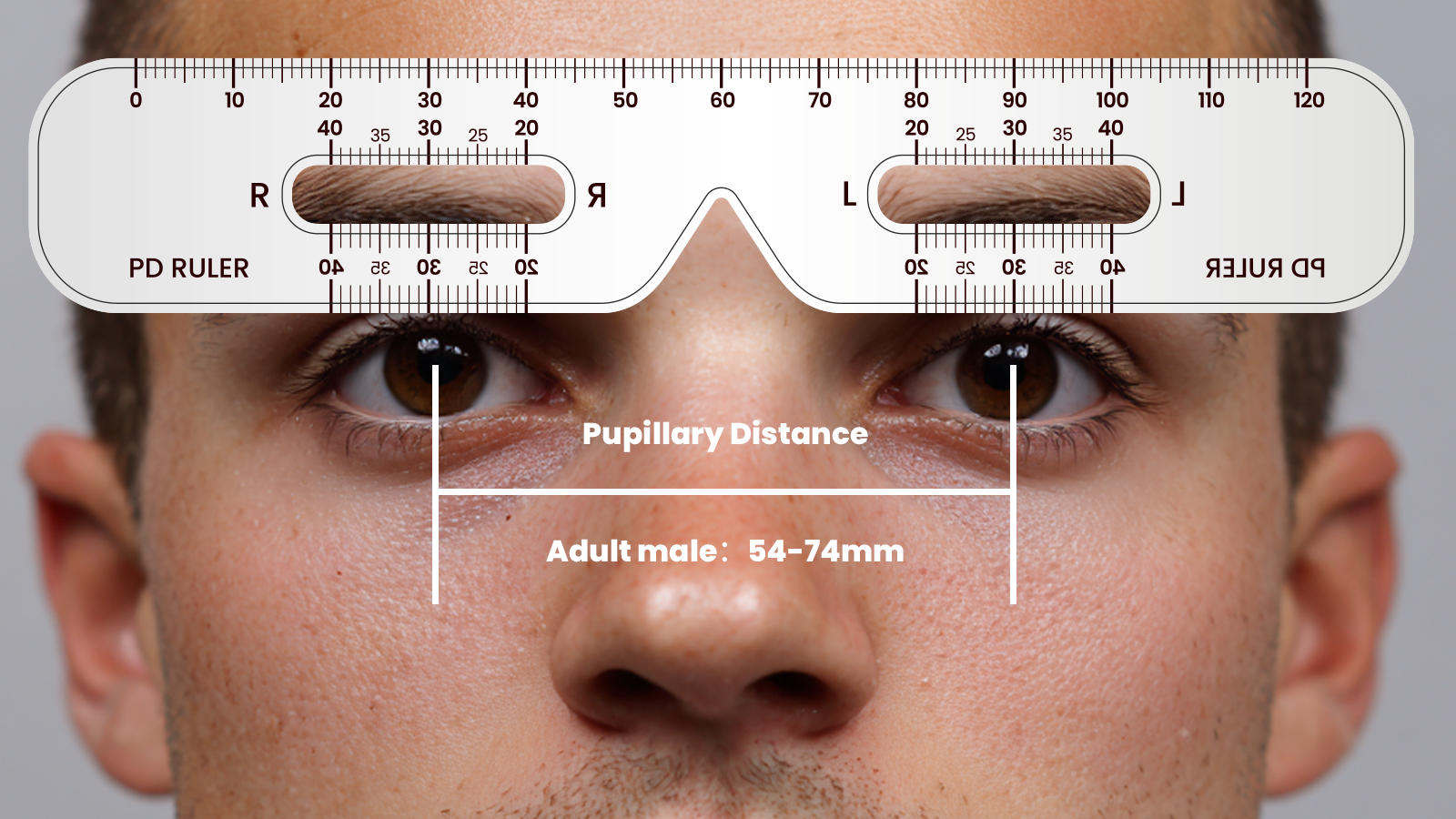
Keywords: pupillary distance, PD measurement, what is PD, pupillary distance measurement, distance PD, near PD, eyeglass fitting
Introduction
When purchasing prescription glasses, most people focus on their lens prescription while overlooking another critical measurement known as Pupillary Distance (PD). Even with a perfectly accurate prescription, glasses may not provide clear and comfortable vision if the pupillary distance is measured incorrectly.
Pupillary Distance is one of the most important measurements in optics because it ensures that the optical center of your lenses aligns precisely with your pupils. This alignment allows light to enter your eyes correctly, providing optimal visual clarity and reducing eye strain.
In this comprehensive guide, you'll learn everything about what pupillary distance is, why it matters, the different types of PD, average PD values, and when PD should be measured.
What Is Pupillary Distance (PD)?
Pupillary Distance (PD) is the distance, measured in millimeters (mm), between the centers of your pupils.
This measurement helps optical laboratories position the optical center of eyeglass lenses directly in front of your pupils. Proper alignment ensures that you look through the most effective part of the lens.
Simply put, PD tells the optician exactly where your eyes are located relative to each other so that your glasses can be customized for your unique facial anatomy.
For example, if your pupils are 64 mm apart, the optical center of your lenses should be positioned accordingly to provide clear and comfortable vision.
Why Is Pupillary Distance Important?
Many people assume their eyeglass prescription alone determines visual clarity. However, even the most accurate prescription can feel uncomfortable if the PD measurement is incorrect.
Proper Lens Alignment
The optical center of each lens must align with the corresponding pupil. Incorrect alignment can distort vision and reduce the effectiveness of the prescription.
Better Visual Comfort
Accurate PD helps prevent:
- Eye strain
- Headaches
- Visual fatigue
- Difficulty focusing
- Blurred vision
Improved Visual Quality
When the optical center aligns with the pupil:
- Vision becomes sharper
- Peripheral distortion decreases
- Reading becomes easier
- Distance vision improves
Essential for High-Power Prescriptions
The stronger the prescription, the more critical PD becomes. Small measurement errors can significantly affect vision in patients with high refractive errors.
Important for Progressive Lenses
Progressive lenses contain multiple prescription zones. An inaccurate PD can make adaptation difficult and reduce the effectiveness of the lenses.
How Does PD Affect Eyeglass Performance?
Imagine looking through binoculars that are not aligned with your eyes. The image would appear distorted and uncomfortable.
The same principle applies to eyeglasses.
If the optical center of a lens does not match the center of your pupil:
- Light rays bend incorrectly.
- Unwanted prism effects may occur.
- Vision can become blurry.
- Eyes must work harder to focus.
Over time, this may lead to visual discomfort and headaches.
Types of Pupillary Distance
There are two primary types of pupillary distance measurements.
Distance PD
Distance PD is measured when looking at an object far away.
This measurement is used for:
- Distance glasses
- Driving glasses
- Everyday prescription eyewear
- Progressive lenses
Distance PD is typically the measurement included in most spectacle prescriptions.
Near PD
Near PD is measured while focusing on close objects such as books, smartphones, or computer screens.
Since the eyes naturally converge inward during near tasks, the near PD is usually smaller than the distance PD.
Near PD is commonly used for:
- Reading glasses
- Computer glasses
- Occupational lenses
- Bifocals
Binocular PD vs Monocular PD
Optometrists may record PD in two different ways.
Binocular PD
This is the total distance between both pupils.
Example:
- Right pupil to left pupil = 64 mm
Recorded as:
PD = 64 mm
Monocular PD
This measures the distance from the center of the nose to each pupil separately.
Example:
- Right eye = 32 mm
- Left eye = 33 mm
Recorded as:
PD = 32/33 mm
Monocular PD is particularly important for:
- Progressive lenses
- High prescriptions
- Asymmetrical facial features
- Precision lens fitting
Average Pupillary Distance Values
PD varies among individuals based on age, facial structure, and anatomy.
Average Adult PD
Most adults have a PD between:
54 mm and 74 mm
Average values:
- Adult females: 60–64 mm
- Adult males: 62–66 mm
Average Children's PD
Children generally have smaller PD values.
Typical range:
43 mm to 58 mm
As children grow, their PD gradually increases.
What Factors Influence PD?
Several factors affect pupillary distance:
Age
Children typically have smaller PD measurements than adults.
Facial Anatomy
Individuals with wider facial structures often have larger PD values.
Genetics
Inherited facial features contribute significantly to PD variations.
Eye Position
The natural positioning of the eyes influences the final measurement.
How Is Pupillary Distance Measured?
Optometrists use several methods to measure PD accurately.
PD Ruler Method
A specialized millimeter ruler is placed across the bridge of the nose.
The examiner measures the distance between pupil centers while the patient focuses on a target.
Advantages:
- Quick
- Affordable
- Widely available
Digital Pupillometer
A digital pupillometer is the most accurate method.
The patient looks through an electronic device that precisely calculates:
- Distance PD
- Near PD
- Monocular PD
Advantages:
- High precision
- Reduced human error
- Ideal for progressive lenses
Smartphone Apps
Several modern applications estimate PD using smartphone cameras.
Advantages:
- Convenient
- Useful for online eyewear purchases
Limitations:
- Less accurate than professional measurements
- Dependent on image quality and user technique
Can You Measure PD at Home?
Yes, PD can be measured at home.
Method 1: Mirror Technique
- Stand approximately 20 cm from a mirror.
- Hold a millimeter ruler against your brow.
- Close one eye.
- Align the ruler's zero mark with the center of the open pupil.
- Open the other eye and record the measurement at the center of the opposite pupil.
Method 2: Assistance from Another Person
A friend or family member can measure the distance between pupil centers while you focus on a distant object.
Method 3: Digital Tools
Many eyewear retailers provide online PD measurement tools.
However, professional measurements remain the gold standard.
Symptoms of an Incorrect PD Measurement
Incorrect PD can significantly affect visual comfort.
Common symptoms include:
- Blurred vision
- Double vision
- Headaches
- Eye strain
- Dizziness
- Difficulty reading
- Poor depth perception
- Adaptation problems with new glasses
If symptoms persist after receiving new glasses, PD should be rechecked.
Why Accurate PD Is Especially Important for Progressive Lenses
Progressive lenses contain multiple viewing zones:
- Distance vision
- Intermediate vision
- Near vision
Even a small PD error can shift these zones out of alignment.
Consequences may include:
- Difficulty reading
- Distorted peripheral vision
- Dizziness
- Difficulty adapting to lenses
For this reason, progressive lens wearers require highly accurate monocular PD measurements.
When Should Pupillary Distance Be Measured?
PD should be measured whenever new prescription eyewear is ordered.
Common situations include:
New Glasses
Every new pair of spectacles requires a PD measurement.
Prescription Changes
Changes in lens power may require re-evaluation of fitting measurements.
Progressive Lens Fitting
Precise PD measurements are essential.
Children's Eyewear
Growing children may require updated PD measurements as facial structures develop.
Online Glasses Purchases
Accurate PD is critical when ordering eyewear online because the optical laboratory relies entirely on the measurements provided.
Common Mistakes During PD Measurement
Avoid these errors:
- Looking at the ruler instead of a distant target
- Measuring in poor lighting
- Tilting the ruler
- Recording incorrect units
- Using an inaccurate smartphone app
- Confusing near PD with distance PD
These mistakes can lead to improperly fitted glasses.
Frequently Asked Questions
What does PD stand for?
PD stands for Pupillary Distance, the distance between the centers of the pupils.
Is PD included in every eyeglass prescription?
Not always. Some prescriptions list PD separately, while others require a separate measurement.
Can I use the same PD for reading glasses and distance glasses?
Not necessarily. Near PD is typically smaller than distance PD due to eye convergence during close work.
How often should PD be measured?
Adults usually maintain stable PD measurements, but children should have periodic reassessments as they grow.
Is monocular PD more accurate?
Yes. Monocular PD provides greater precision, particularly for progressive and high-prescription lenses.
Conclusion
Understanding what pupillary distance (PD) is can make a significant difference in the quality and comfort of your vision. PD measurement ensures that the optical center of your lenses aligns perfectly with your pupils, allowing you to experience clear, comfortable, and efficient vision.
Whether you are purchasing single-vision glasses, reading glasses, bifocals, or progressive lenses, an accurate pupillary distance measurement is just as important as your prescription itself. If you're ordering new eyewear, always ensure your PD is measured correctly by an eye care professional to achieve the best possible visual outcome.
Remember: A perfect prescription paired with an incorrect PD can still result in poor vision, discomfort, and eye strain. Accurate PD measurement is the foundation of properly fitted eyeglasses.
By Unknown Author
Status: Published